Choose a pack
Pick the number of finished portraits and distinct scenes.
shape a song with our dreampool.
LOOKING GLASS AI · SEE INTO YOUR FUTURE
Turn your photos into polished portraits, build original songs, and shape new worlds in the Mirage Factory. No monthly meter. Pay once for a package and keep everything you make.
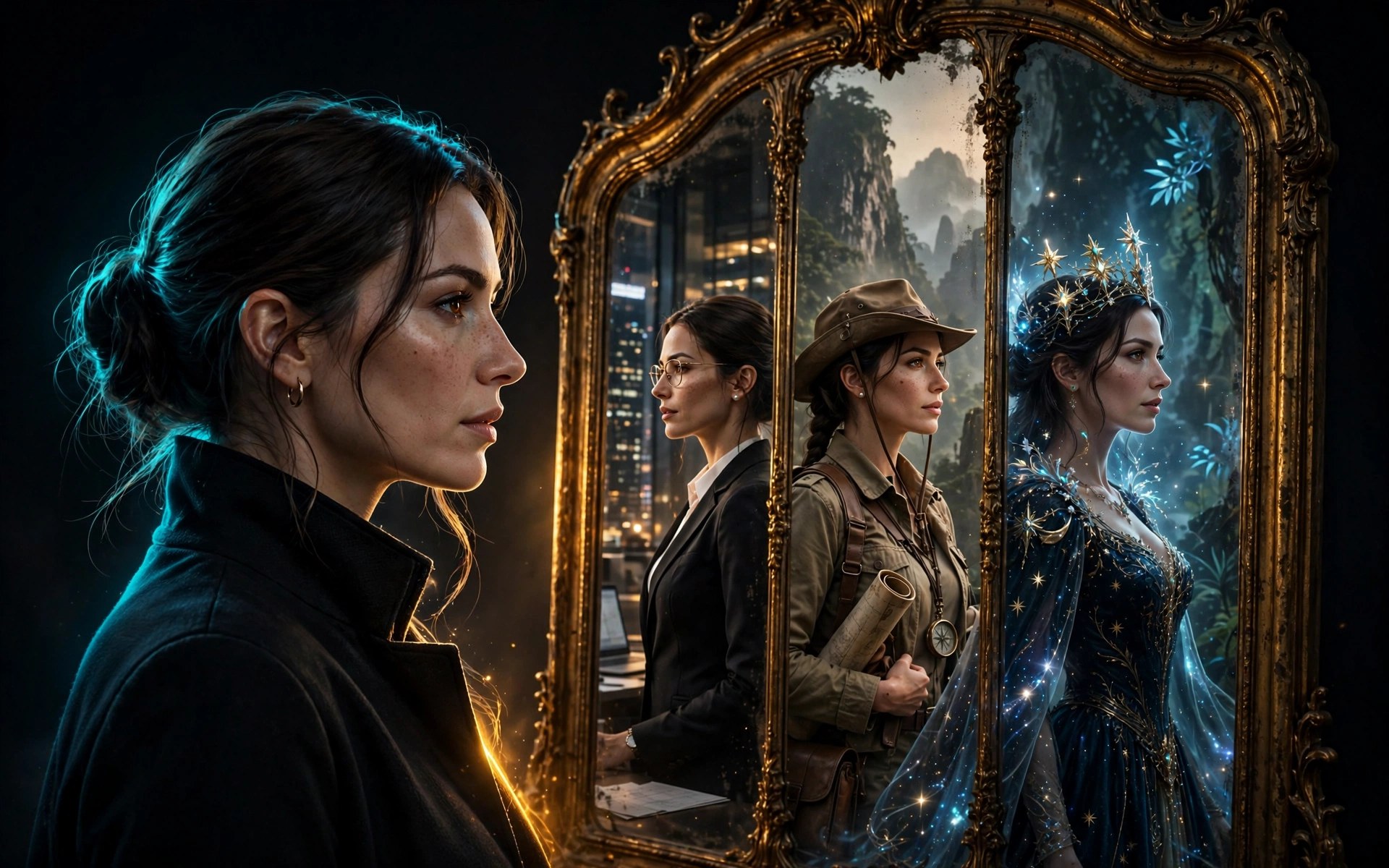
Choose a pack, check that you have 15–20 varied selfies, and get a private gallery built around a personal model of your face.
Pick the number of finished portraits and distinct scenes.
Use the built-in checker to prepare 15–20 strong photos.
Your face becomes the reference for this portrait order. Measured on our NVIDIA Tesla P40: a 192-step SDXL training benchmark took about 27.4 minutes (3 of 3 runs).
Review a private gallery and download the portraits you love.
Every pack includes personal model training and a private gallery. The middle pack delivers 48 finished portraits across eight scenes for $37.
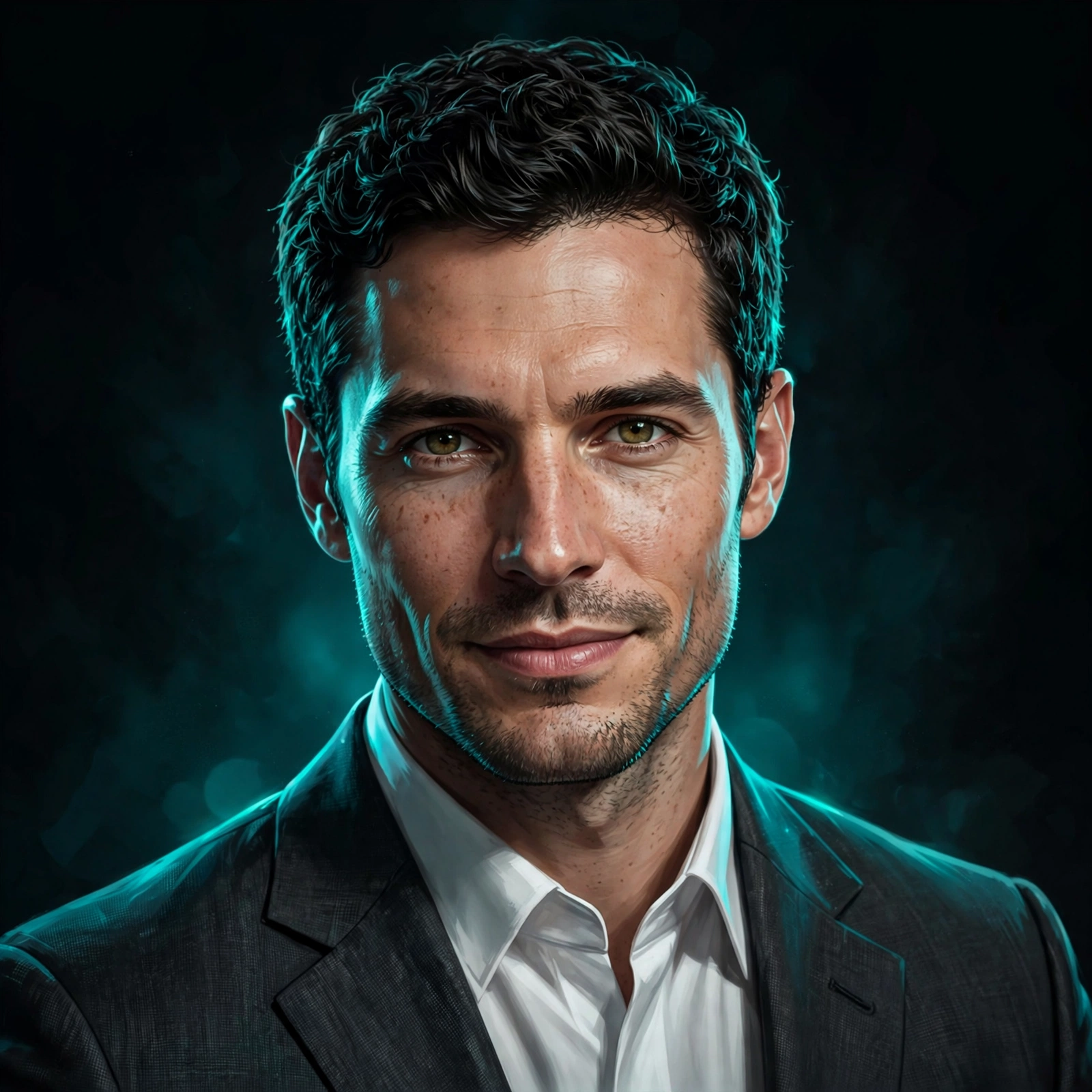
A focused first look for headshots, profiles, and one strong transformation.
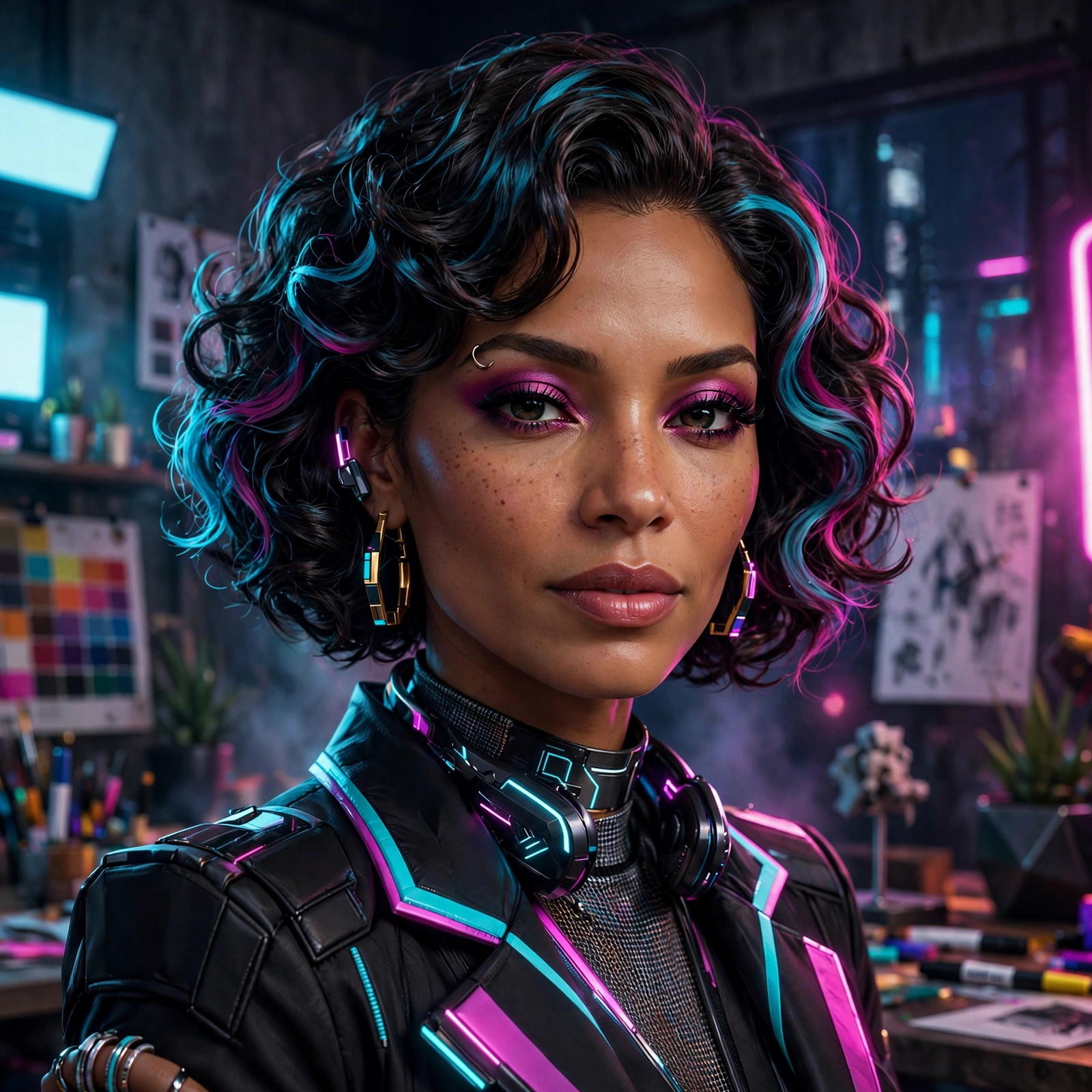
The best deal: twice the portraits and twice the scenes for only $10 more.

The full transformation: twelve worlds and enough finished work for a whole campaign.
ONE PURCHASE · NO SUBSCRIPTION
Buy a package when you need it. Pay once, keep what you create.
TEST checkout — nothing is charged until the merchant account is live.
THE HONEST MATH
If you make fewer than five songs in a month, pay-as-you-go costs less than the usual subscription. If your pace ever makes a subscription the smarter deal, we will tell you plainly.
Simple mode automatically strengthens both your sound description and your lyric material before generation.
Tip: tap a preset to light up likely word banks below the pool, choose a category to see all of its terms together, or type freely. Build this song sends your recipe and lyrics to ACE-Step on the GPU render server; the finished track plays here and stays in your account.
Start broad, then narrow by subgenre or search terms such as “industrial,” “808,” “psytrance,” “guitar,” or “8-bit.” Each focused pack is designed to stay useful without making you buy sounds you will never use.
A consistent, industry-familiar structure makes it easy to find sounds across every genre.
Start with a focused arrangement workspace, then open the full editing and mixer controls whenever the track needs more shaping.
Simple Studio · open-source browser sequencer and mixer
Advanced Studio · open-source browser multitrack workstation
Tap cells to shape eight sections, choose a starter groove, audition it in your browser, and export a playable draft or editable project file.
Tap cells to bring a lane in or out. Solo isolates a lane; mute silences it without changing the arrangement. Playback moves through the form at your chosen tempo.
Start in Meshtrack for a focused sequencer and mixer. Switch to ui_shout for multitrack arrangement, piano roll, recording, MIDI, and deeper editing.
Start with a ready-made scenario or shape your own image one choice at a time. Every option is drawn from an original, historical, mythological, or public-domain source.
PAID PHOTO EDITING
Upload one photo and describe the change you want. Finished edits carry a visible AI-manipulation mark plus provenance metadata.
Your exact price appears before submission. Nothing is charged until you approve it.
Sign in to a paid, verified account to unlock photo editing.
Every delivered image includes an AI-manipulation watermark and provenance tag. Measured on our GPU: three test edits took 77, 81 and 84 seconds from payment to download.
Fourteen guided categories keep the prompt focused, including Appearance for people. Props and facial details allow three choices, hair style two; exclusions allow several.
Every image is rendered by SDXL on the Looking Glass GPU render server and saved to your account. Checkout is in TEST mode until the merchant account is live, so nothing is charged.
Describe one short scene and the Looking Glass render server turns it into a silent video clip with WanGP (HunyuanVideo 1.5 text-to-video). Text prompts only: there are no photo uploads.
Clips render one at a time. Our Intel Arc Pro B60 takes each clip while it is up; when it is offline or busy, our Tesla P40 renders it instead (15-second clips are longer than the B60 accepts, so they always use the P40). Render time: 5-second clip (120 frames): ~6 min on the B60, ~24 min on the P40 (both measured) · 10-second clip (240 frames): ~17 min on the B60, ~1 h 9 min on the P40 (both estimated) · 15-second clip (360 frames, the maximum): ~2 h 17 min on the P40 (estimated). Measured on live test orders: 120 frames (5 seconds) took 345.8 s on the B60 and 1447 s on the P40. Earlier P40 runs of this exact pipeline: 49 frames in 430 s; 97 frames in 1024.4, 1024.7, 1024.6 s; 120 frames in 1437.9 s. Estimated: the P40 times for 10 and 15 seconds are fitted to those P40 runs (longer clips take more than proportionally longer because the model's attention work grows with clip length); the B60 time for 10 seconds is the P40 estimate scaled by the measured 5-second B60/P40 ratio (0.24), not yet measured on the B60. Each clip waiting ahead of yours adds its own render time: ~6 min (B60) or ~24 min (P40) for 5 seconds, ~17 min (B60) or ~1 h 9 min (P40) for 10 seconds and ~2 h 17 min for 15 seconds.
Every clip is rendered by WanGP on the Looking Glass GPU render server and saved to your account. Checkout is in TEST mode until the merchant account is live, so nothing is charged.
One place for your portrait orders, generations, downloads, and active training jobs.
No password to remember. Enter your email and Looking Glass will send a single-use login link.
OPENING YOUR ACCOUNT
FIRST TIME HERE
Two short steps, then you're making things. You can change all of this later under Account.
YOUR ACCOUNT IS READY
What do you want to make first?Pick a starting point. Every one of these is live — no setup. Images, edits, songs and video clips render on our own GPUs; each tool shows the times we measured.
George Simon is an Air Force veteran who designed and built Looking Glass AI himself — the website, the pipeline, and the GPU fleet it runs on.
By day, he's the IT Manager for a school district — the person who keeps the whole operation's technology running. Before that, he ran welding and cutting robots at a welding shop in Fox, Alaska: a five-axis oxy-fuel cutting torch working as an I-beam coper, and a Daihen welding robot with two turntables running pulse MIG — a machine that welded so fast it took five fit-up welders to keep it fed. Steel or software, the job's the same: build complex systems and keep them running.
He's also a father of four, and this business is built like it — by hand, with care, and held to a standard his family can be proud of.
In his free time, he builds and flies drones, builds and rides electric skateboards, and designs his own solar off-grid house. He also founded Aperture Laser — designing his own laser CNC engraving and cutting modules, plus original CNC machine designs, produced in-house. Making things is what he does.
The name comes from the idea of looking into what's ahead — every version of you, from the boardroom headshot to the fantasy portrait you haven't imagined yet. Upload your selfies, and the studio trains a personal AI model that generates your gallery. No per-order human touch, no waiting on someone else's schedule.
Big AI runs in giant data centers that drink water and power by the ton. Looking Glass AI doesn't work that way. Every job runs on George's own local GPU fleet — real hardware, in a real room, not a rented slice of someone's cloud. Your photos stay on his machines. They aren't sold, shipped off to train someone else's model, or warehoused in a data center you'll never see.
And the whole operation runs on solar power. Your gallery gets made without pulling from the grid and without feeding the water-hungry data center machine. Clean compute, end to end.
The machines themselves are repurposed, too — retired datacenter GPUs and second-hand parts given a second life doing AI work instead of ending up in a landfill.
There's no support maze here. The person who built it is the person who runs it. If something's wrong, it gets fixed — by the same hands that built it.
He built Looking Glass AI to provide for his family.
Pick a game while you wait. We’ll remember your choice for the next generation in this session.
Arrow keys or swipe to steer. Eat signal points without hitting the edge or yourself.